Somewhere In-Between
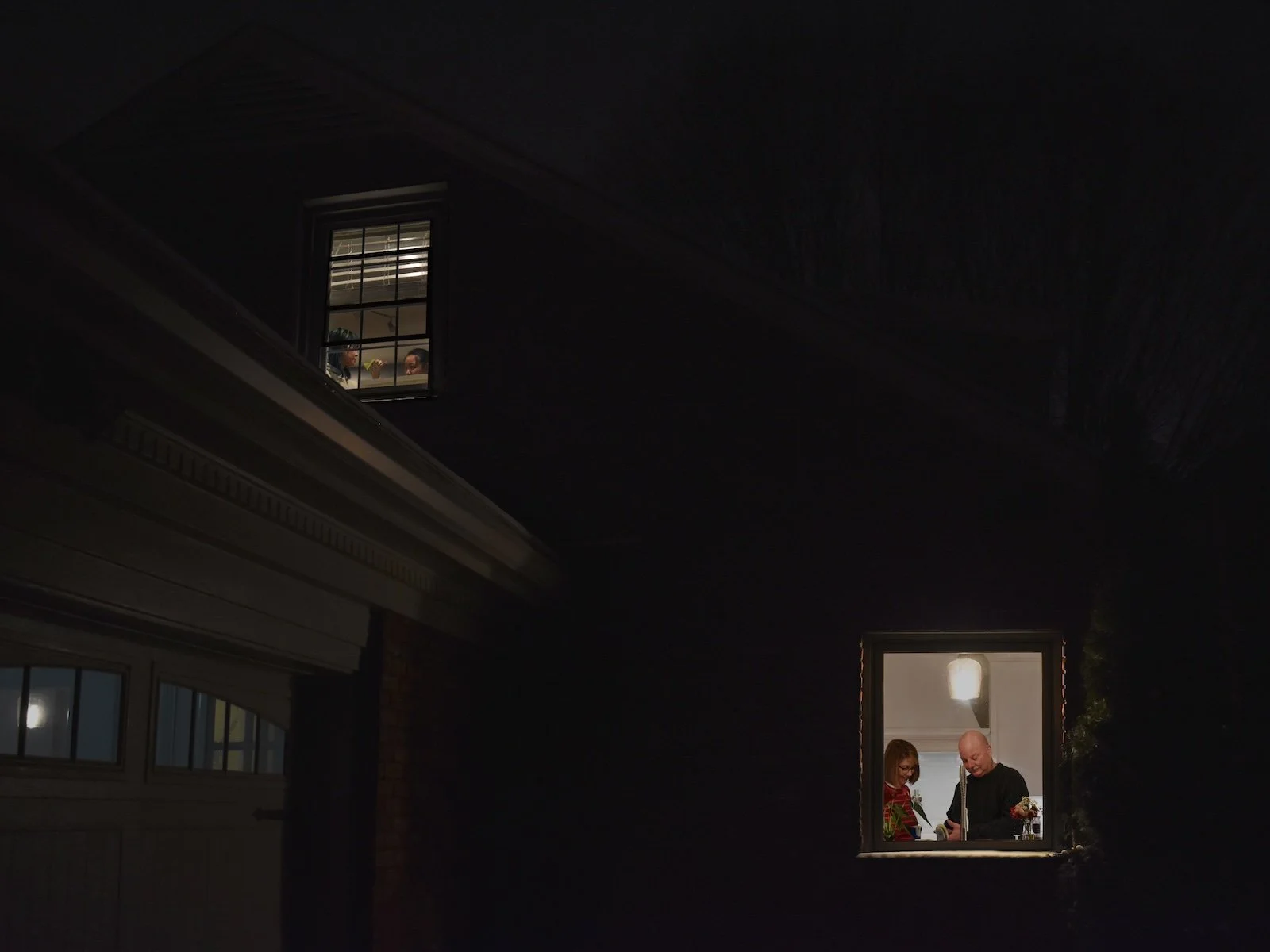
The Gries Family (2025). Photo by LiYe Whalen. Courtesy of LiYe Whalen.
By LiYe Whalen (she/her)
Adoptee, 23
From Yihuan, Jiangxi; Living in Fort Thomas, Kentucky
Instagram: @liye_whalen @liyewhalen.photography
I was adopted from China when I was eighteen months old and raised in a single-parent household with my mom and her son in a predominantly white community. Growing up, I rarely acknowledged my Asian identity; I was too focused on blending in. I used to joke that I was a “basic white girl” on the inside, but beneath that humor was a quiet disconnection from who I was.
Adoptees have two identities: their ethnicity and their nationality. I was adopted from China as a baby and moved to the United States with my adoptive mom. Raised in Northern Kentucky with my white mother and brother, I adapted to my white American culture. I am now struggling with my identity as a young Chinese American woman. I question if I even have the right to claim my Chinese identity in fear that I’m ignorant and disrespectful to Chinese culture. I did not grow up with any traditional customs or cultural awareness, resulting in my Chinese identity being unfulfilled. At the same time, my Chinese appearance complicates my American identity.
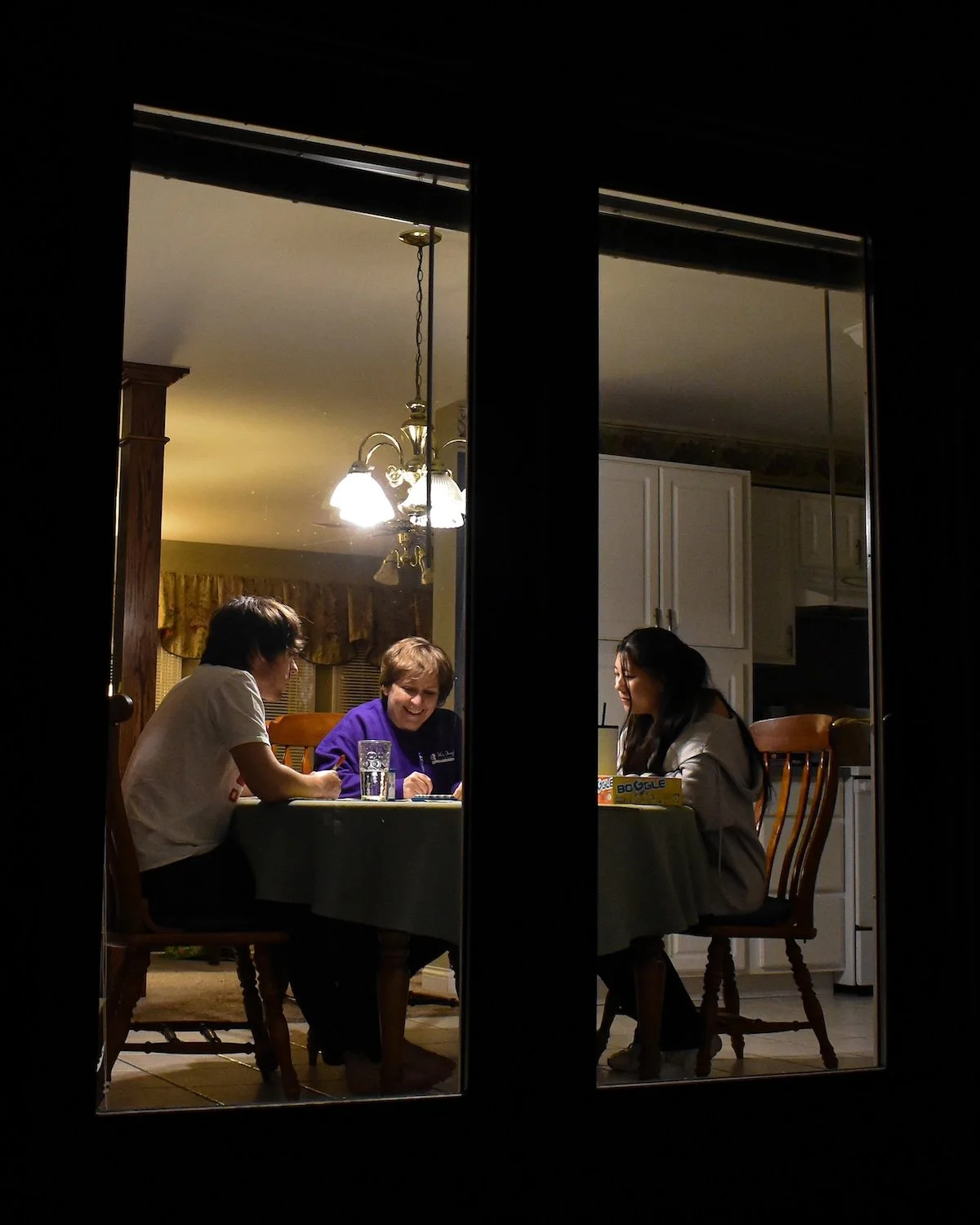
The Whalen Family (2024). Photo by LiYe Whalen. Courtesy of LiYe Whalen.
It wasn’t until college that I began to question how little I knew about my own culture. Learning about my adoption and Chinese heritage filled me with both curiosity and shame — curiosity for what I’d missed, and shame for how long I’d ignored it. I started to explore those emotions through photography, hoping to understand myself more deeply.
For my BFA thesis, I turned the lens toward my family and myself. I photographed us from outside our home, peering through windows — a visual metaphor for the barriers I’ve felt between identity, family, and culture. Standing outside looking in captured my experience of both belonging and distance. The process was vulnerable; I was confronting feelings I had kept buried.
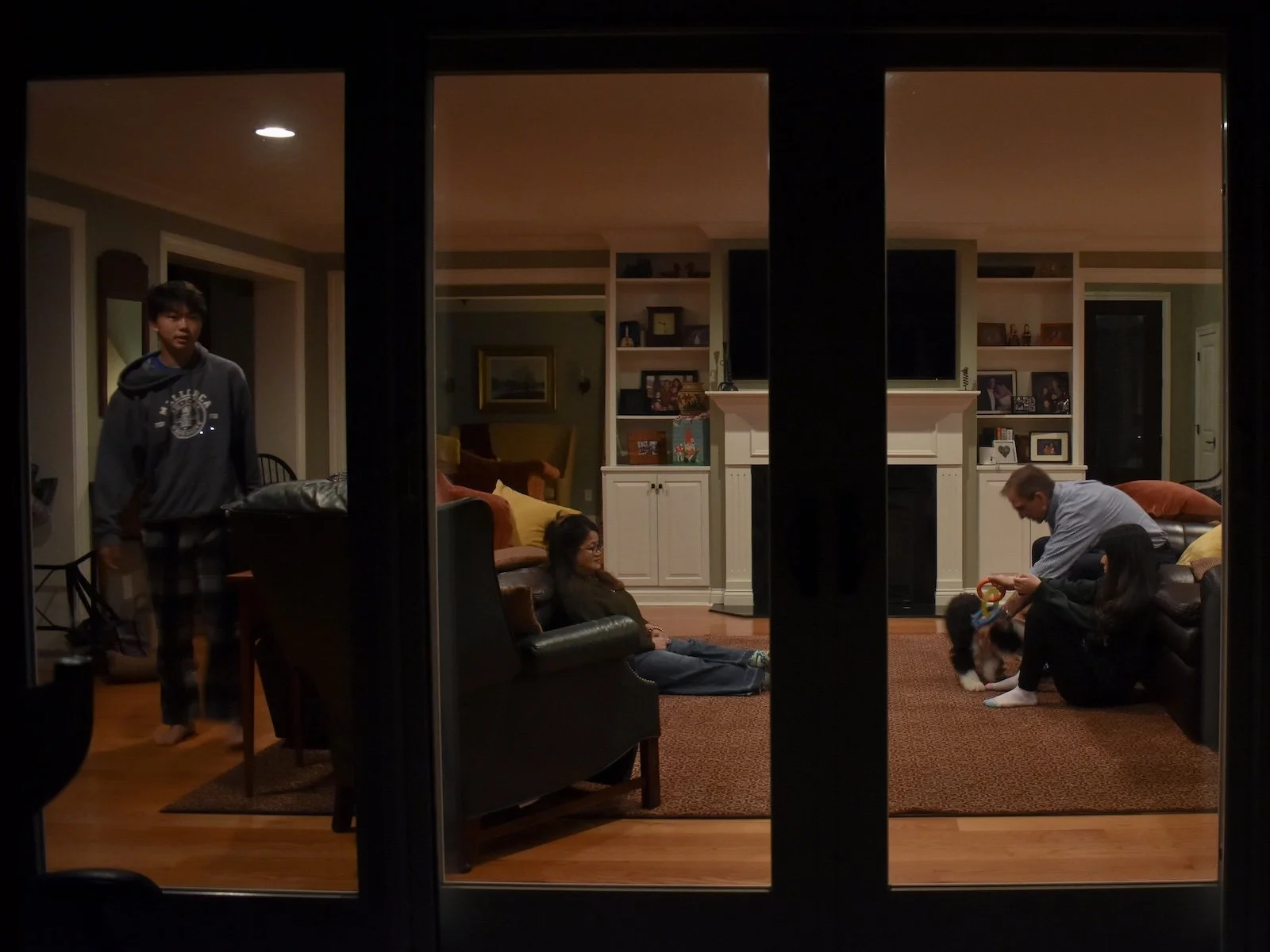
The Brauley Family (2025). Photo by LiYe Whalen. Courtesy of LiYe Whalen.
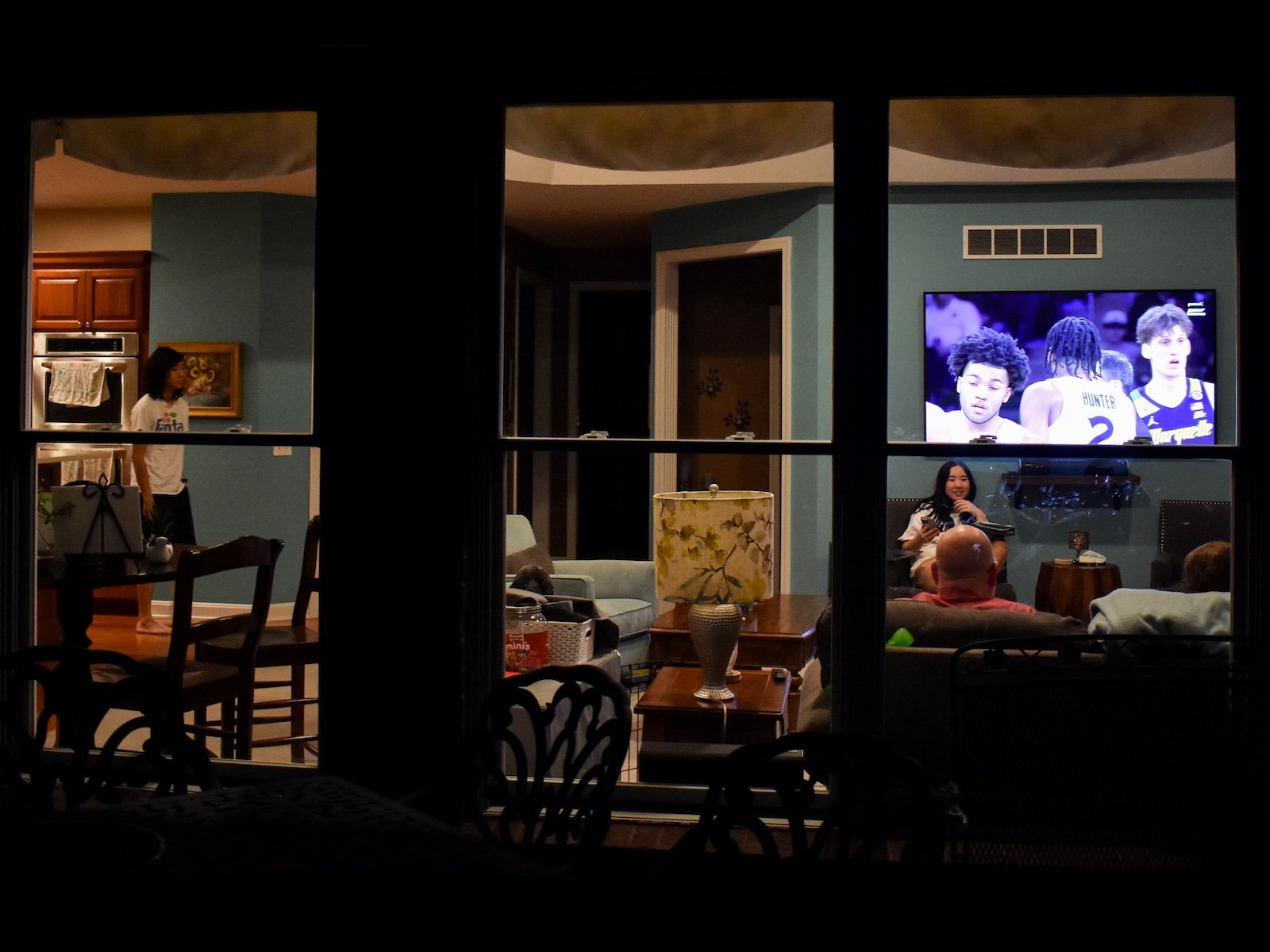
The Grau Family (2025). Photo by LiYe Whalen. Courtesy of LiYe Whalen.
I began reaching out to other interracial adoptive families, which has brought me to the realization that I am not alone in my feelings of displacement. Through these interactions, I staged the families inside their homes while photographing them through their windows. Using the action of stepping outside, and incorporating windows as barriers is a metaphor for this disconnection I feel between myself, my family, and my culture. By staging these families, I am providing a glimpse into how others live and address these differences within a family.
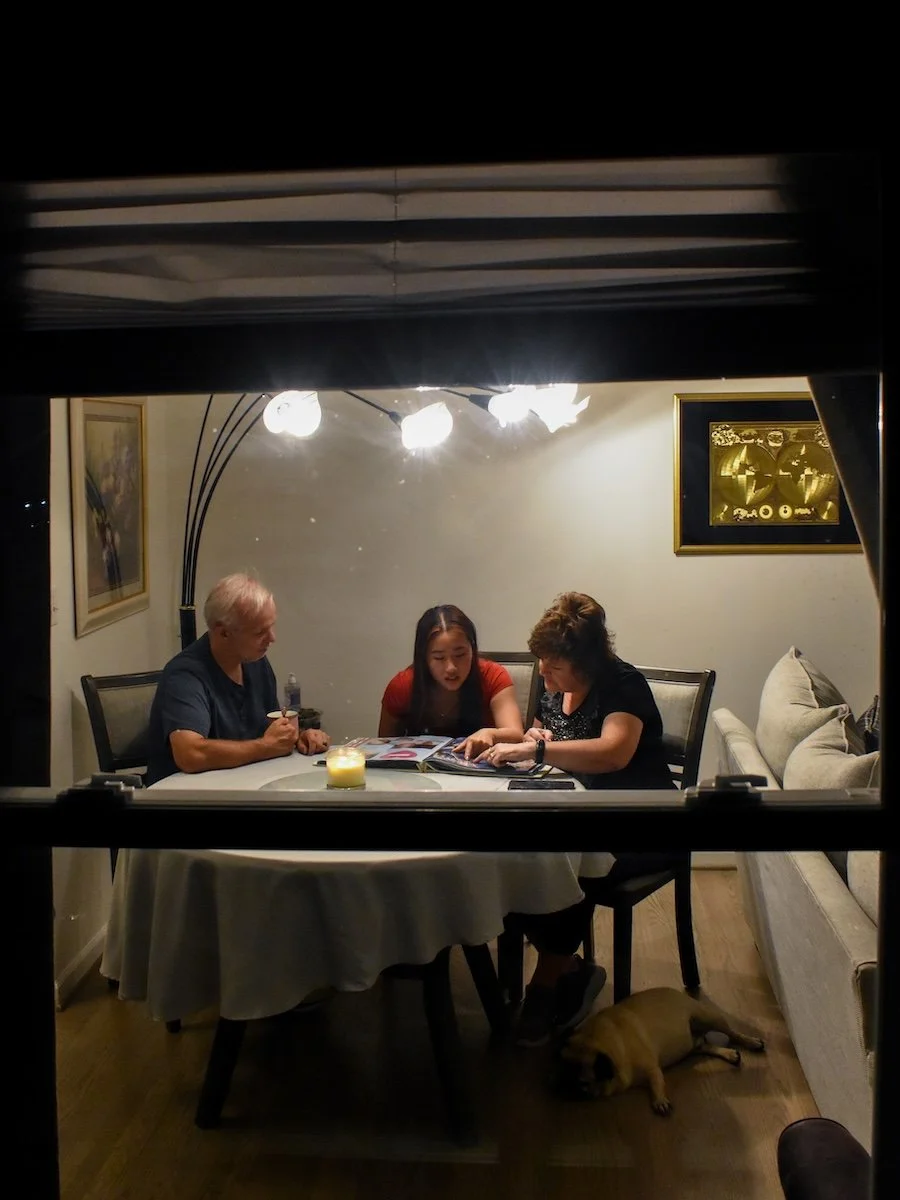
The Cornish Family (2024). Photo by LiYe Whalen. Courtesy of LiYe Whalen.
Highlighting both the positive and negative sides of adoption, this project proves that blood doesn’t define a family. Being raised in a white neighborhood where children looked like their parents, I never felt fully understood. Despite how loving a family can be, there is always a barrier separating the adoptive child, which can lead to feelings of sadness and guilt. These interactions with other adoptees open this conversation and normalizes the feelings that come with being adopted and helps me realize I am not alone.
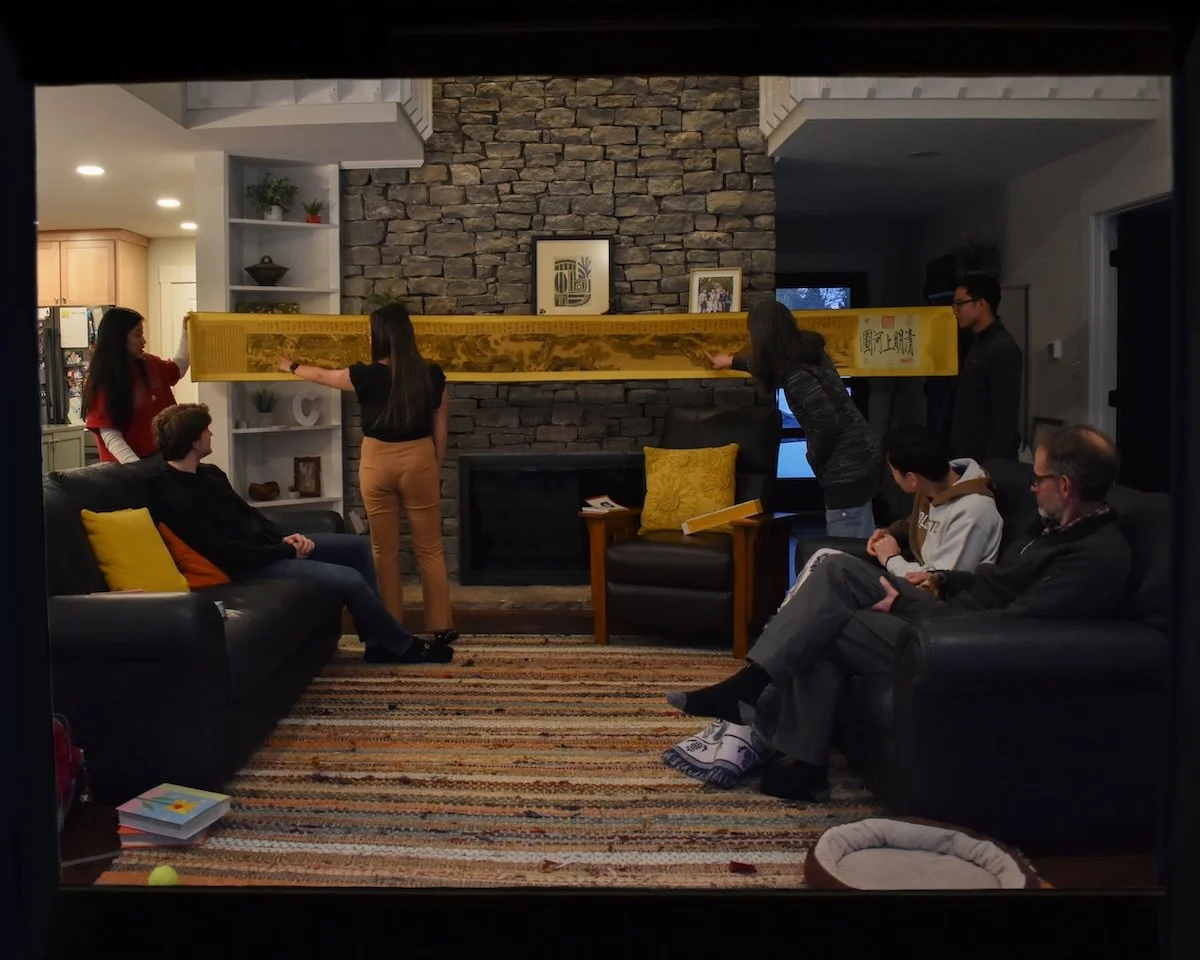
The Corum Family (2025). Photo by LiYe Whalen. Courtesy of LiYe Whalen.
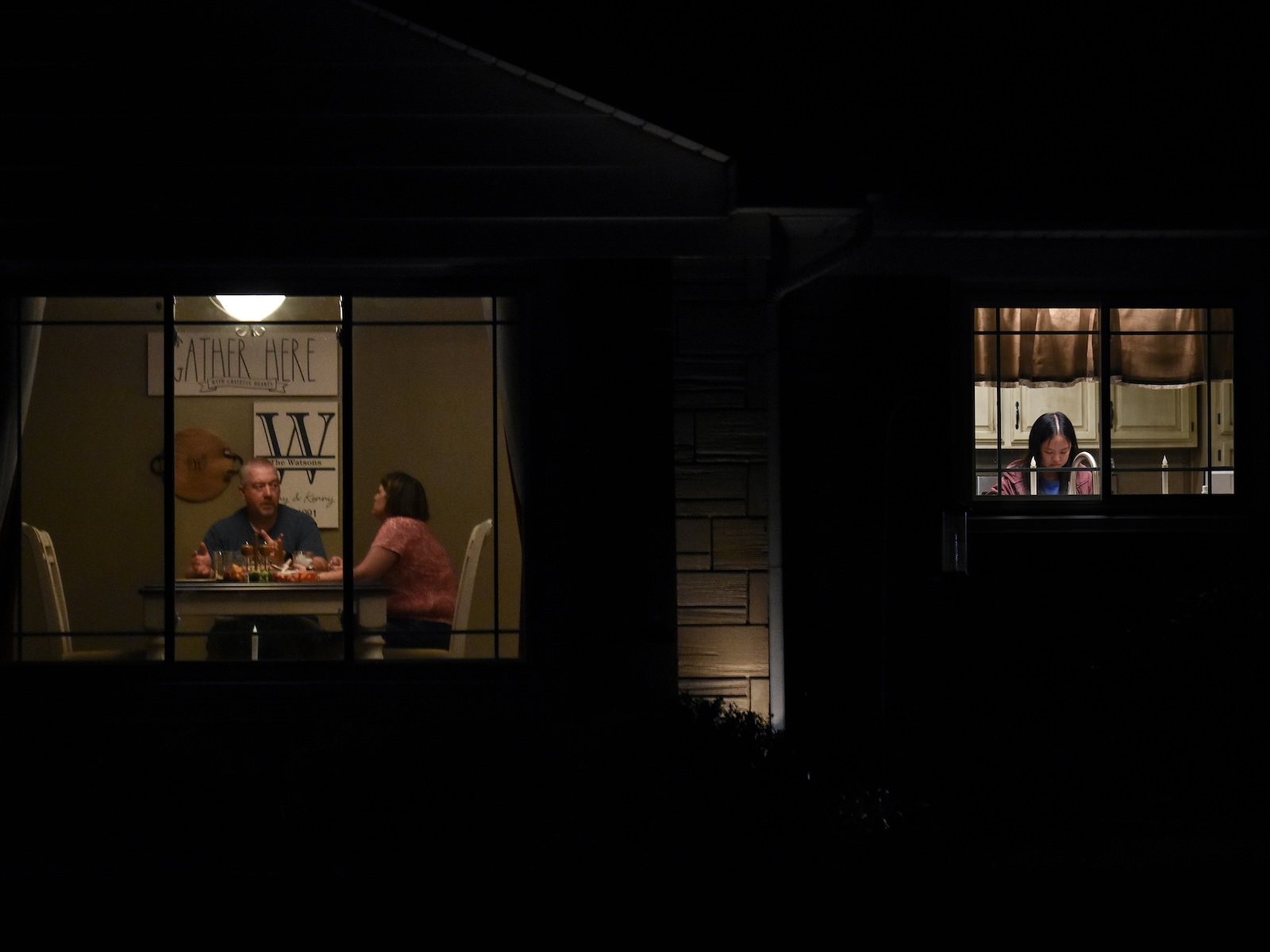
The Watson Family (2024). Photo by LiYe Whalen. Courtesy of LiYe Whalen.
Through this project, I began connecting with other interracial adoptees and adoptive families. Listening to their stories, I realized that the sense of “in-between-ness” I had carried for so long was not mine alone. Many of us share the same emotional contradictions: love for our adoptive families, gratitude for our lives, and a lingering question of where we truly fit. These conversations helped transform my isolation into understanding and community.
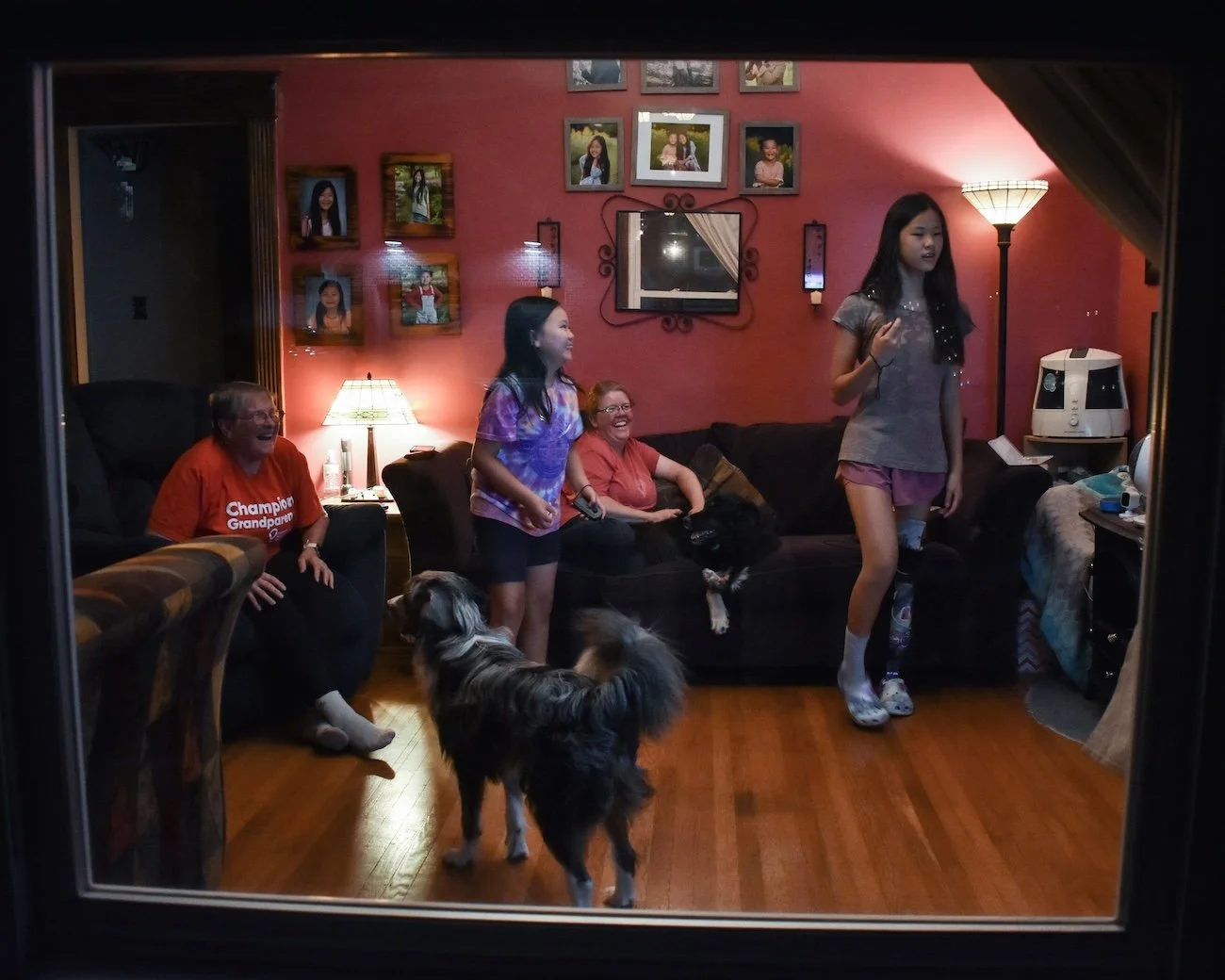
The Philippe Family (2024). Photo by LiYe Whalen. Courtesy of LiYe Whalen.
My mom has always been open about my adoption, answering my questions with honesty and compassion. Her willingness to learn alongside me has shown me how powerful it is when adoptive parents create space for their children’s complex feelings without judgment. That openness, I’ve learned, allows healing to happen.
As international adoption from China has now closed, those of us adopted between 1992 and 2024 represent a distinct generation — one bound by shared stories of loss, love, and rediscovery. My hope is that my work contributes to that ongoing conversation, offering a place where adoptees can see their emotions reflected and feel less alone.
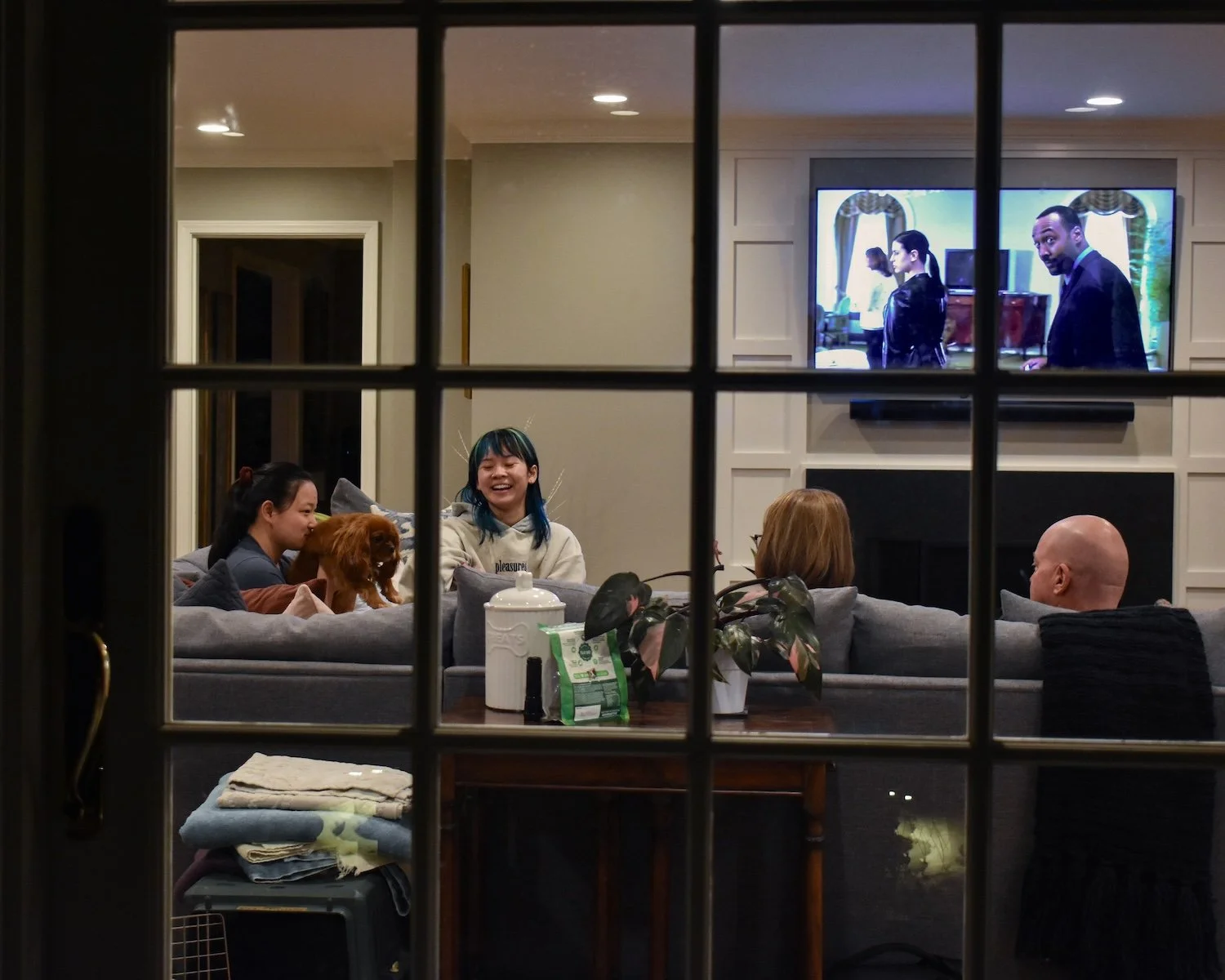
The Gries Family (2025). Photo by LiYe Whalen. Courtesy of LiYe Whalen.
If you’re an adoptee or adoptive family interested in connecting or learning more about this project, I’d love to hear from you. Contact LiYe at liye.whalen@gmail.com.
This piece is based on an artist statement from LiYe’s BFA Thesis Exhibition, finished in April 2025.
The views expressed in blog posts reflect those of the authors and do not necessarily represent the shared views of Nanchang Project as a whole.
Our blog stories come from readers like you!
We invite you to send us your own story to share. We accept submissions from anyone whose life may have been touched by Chinese international adoption including, but not limited to: adoptees, adoptive families, birth families, friends, searchers.
Details in the link below!