My Many Names
By Thea (she/her)
Adoptee, 21
From Guangzhou, China; Living in Boston, Massachusetts
Instagram: @theaforrest
My Many Names
Ji Miao Yong,
left at a Hospital in Guangdong Province, Southern China.
A name that belongs to me, and yet for most of my life has felt so foreign.
I don't remember this name.
I don’t remember hearing it spoken.
Who called me this? Who chose this name? Why this name?
Ji Miao, a generation name,
shared with the nine other girls I was adopted alongside.
Ten of us, bound by only two syllables,
outlining our shared identity, our shared beginnings.
Weng Weng,
My mother tells me this is what I was called in the orphanage.
She says it means “good swimmer” or “strong swimmer”.
I did not learn how to swim until I was nearly nine years old.
And yet–
To give a child a name tied to water,
forever flowing, ebbing, and rearranging,
signifying movement,
survival,
and the ability to stay afloat,
even when dropped into something vast and unfamiliar, feels symbolic.
Thea.
The name my mothers gave me when I arrived in the United States, just twenty months old.
This is the name I know. This one feels familiar.
It is the name I have spent hours tracing over dotted lines at the kitchen table.
The name called up the stairs when dinner was ready.
The name printed on countless report cards.
The name I begged to have monogrammed in my L.L. Bean backpack before the first day of third grade.
The scribbled name I show before boarding a plane.
19 years, 0 months, and 6 days,
since I had last stood on Chinese soil. It feels surreal.
Part of me is curious if I might feel different when I step off the plane.
If something will shift.
If recognition will rise instinctively.
Instead, names surround me.
外国护照.
Foreign Passports.
English printed underneath in bold font.
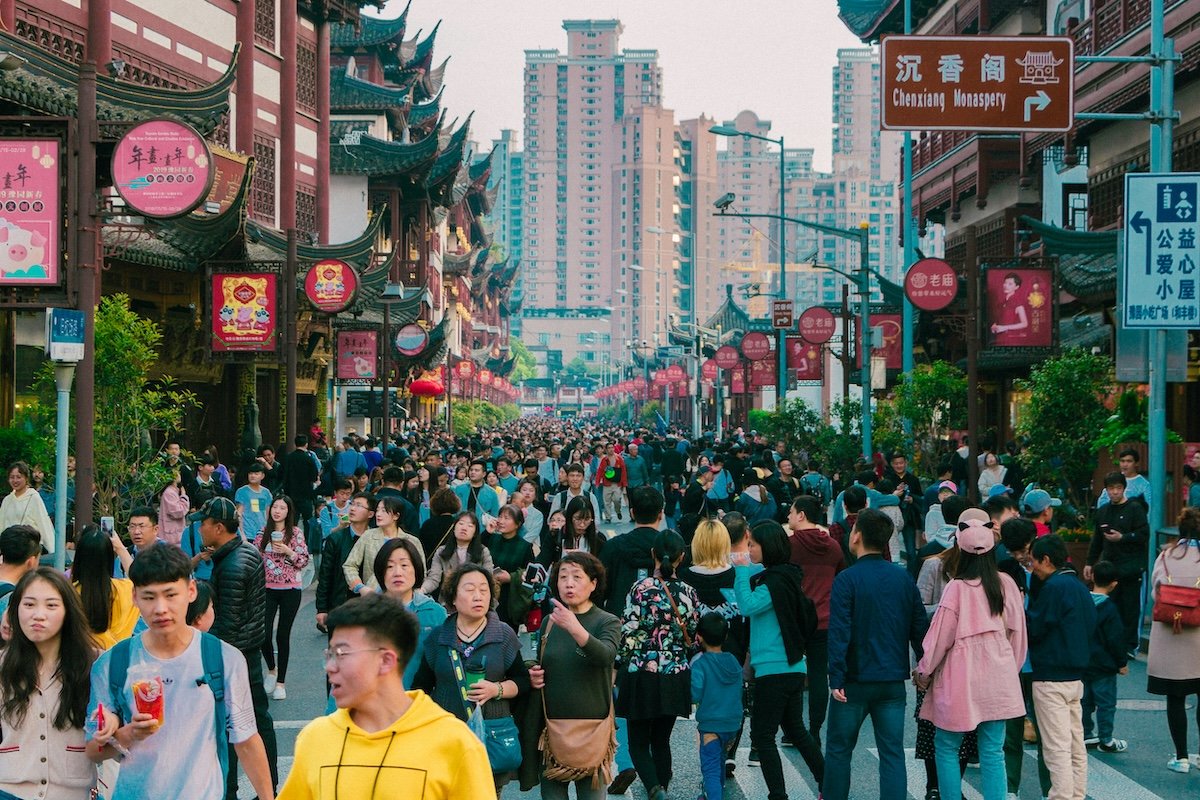
Signs, stations, advertisements, and menus.
Names for things I do not know,
places I have not been,
foods I have not tried.
On my second night in Beijing, I approach a stand situated outside a restaurant, yellow lights reflecting off the wet pavement.
“Hello, do you have dumplings here?” (“你好, 你这里有饺子吗?”)
I ask, struggling to get the words out.
Behind the counter is an older man, gray scattered across his coarse black hair, and wrinkles at the corners of his mouth.
He pauses.
“What?” (“什么?”), he asks.
His eyebrows furrow in confusion.
I repeat myself again, “Hello, do you have dumplings here?” (“你好, 你这里有饺子吗?”)
He squints his eyes and I can feel him studying my face, my expression.
What is he thinking? If she is Chinese, then why can she not speak the language
“Sorry, I cannot speak Chinese,” I say automatically before attempting to translate,
(“对不起,我不会说中文”), completely missing any tonal differentiation.
The syllables feel heavy on my tongue, as if my mouth is not meant to be speaking them at all.
On the third try, I finally end up pronouncing the word dumpling (饺子) correctly and he responds with (“没有”), saying that he does not have any.
“Thank you” (“谢谢”), I reply.
As I turn away, I can feel the shame and embarrassment creeping in,
but there is also something else. Something I did not expect.
Grief.
Grieving the distance between how I look and what I can say.
Grieving the hope that I might understand.
Grieving the realization that I did not.
Names.
Often assigned to us by another.
For a long time, my many names felt like they were battling one another,
like they were constantly competing for my acknowledgement, for my acceptance.
Two halves of myself, I kept trying to separate.
Too Chinese to be American, and too American to be Chinese.
But as I’ve come to learn, the name I am called now, does not erase the names I was first given.
They remain imprinted within me,
like ink from a chop pressed deep into intricate paper fibers.
Ji Miao Yong.
Weng Weng.
Thea.
My names.
They tie me to my past,
to the sounds and syllables,
I may have once spoken.
They are all part of me,
even the parts I don’t remember,
even the parts I am still learning how to pronounce.
The views expressed in blog posts reflect those of the authors and do not necessarily represent the shared views of Nanchang Project as a whole.
Our blog stories come from readers like you!
We invite you to send us your own story to share. We accept submissions from anyone whose life may have been touched by Chinese international adoption including, but not limited to: adoptees, adoptive families, birth families, friends, searchers.
Details in the link below!